.png?width=160&height=96&name=logo%20(1).png)
.png)
Where Education Meets Play-Based Indoor Environments
The most effective learning environments today are no longer confined to traditional classrooms. Schools, museums, libraries, and children’s spaces are increasingly embracing a powerful shift: learning happens best when environments are active, immersive, and designed for engagement.
At the center of this evolution is a shared design philosophy: innovative learning spaces and indoor playground environments are no longer separate ideas. They are converging into one integrated approach: play-based learning environments that support cognitive, physical, and emotional development at the same time.
Worlds of Wow has been at the forefront of this transformation, designing spaces where education and play coexist seamlessly to create meaningful, memorable experiences for children of all ages.
Why Indoor Playgrounds Belong in Modern Learning Spaces
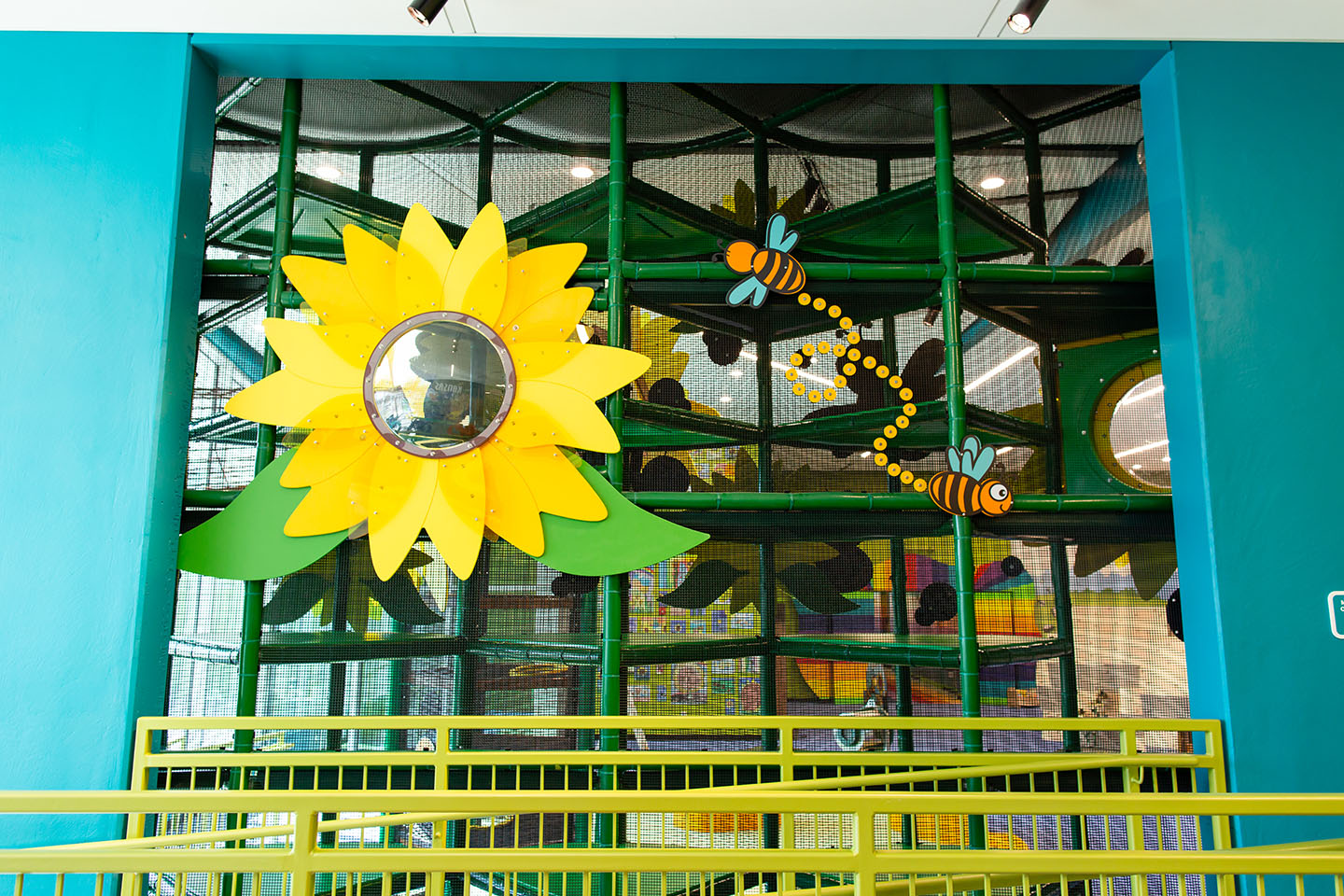
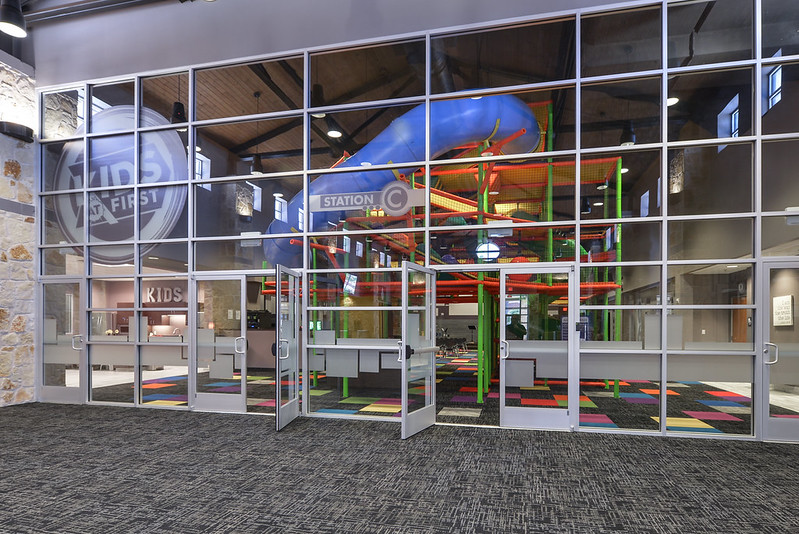
Indoor playgrounds are no longer just recreational features. When intentionally designed, they become powerful educational tools. They support:
• Active learning through movement
• Social development through group interaction
• Problem-solving through exploratory play
• Sensory engagement for deeper retention
• Inclusive access for children of all abilities
This matters in educational environments because research consistently shows that children learn best when they are physically and mentally engaged at the same time. Studies have found that physical activity can improve attention, memory, executive function, and academic performance, reinforcing the connection between movement and learning (Centers for Disease Control and Prevention, 2010; Donnelly et al., 2016). An indoor playground inside a school, museum, or community learning center becomes more than an attraction, it becomes a learning engine.
Real-World Example: Turning Learning Pods Into Immersive Play Environments
One of the most powerful examples of innovative learning design can be seen in themed, play-based educational environments like Centennial Elementary School in Humble, Texas.
The themed learning pods give each student a more immersive and meaningful school experience. Children gathering in these spots explore, experiment, and solve problems in imaginative and playful ways.
In this video, the principals, teachers, and students speak about the benefits of their innovative learning environment.
In this environment, immersive learning pods represent different real-world themes such as:
• A historic downtown district
• Space exploration zones
• Dinosaur and prehistoric discovery areas
Rather than learning from static visuals or textbooks alone, students physically enter environments that reflect the subject matter they are studying.
For example:
Children learning about space may gather under suspended aircraft models and astronaut figures, while students studying nature explore textured environments designed to feel like outdoor ecosystems.
These spaces encourage students to:
• Explore concepts through physical interaction
• Retain information through sensory engagement
• Collaborate in shared imaginative environments
• Build real-world cognitive connections through play
This is exactly where indoor playground design intersects with education. The same principles used in themed play structures (immersion, interactivity, movement, and storytelling) are the same principles driving modern learning space design.
Indoor Playgrounds as Educational Infrastructure
Traditional thinking places playgrounds outside the classroom and learning within it. However, modern design flips this idea.
Indoor playgrounds inside learning environments function as:
• STEM exploration zones
• Storytelling environments
• Motor skill development areas
• Collaborative problem-solving spaces
• Emotional regulation and sensory spaces
When integrated into schools, museums, and libraries, they become infrastructure for development, not just recreation.
Worlds of Wow designs these spaces to align with educational goals, ensuring that every slide, climbing feature, mural, or interactive element supports a broader learning outcome.
The Role of Play in Cognitive Development
Play is not separate from learning, it is one of its primary drivers. Through play-based environments, children develop:
• Critical thinking skills
• Communication abilities
• Creativity and imagination
• Spatial awareness
• Emotional resilience
• Collaboration and teamwork
Indoor playgrounds provide the physical context where these skills are practiced naturally, without the pressure of traditional instruction.
Why Schools and Institutions Are Investing in Indoor Play-Based Learning Spaces
Across education, healthcare, and community environments, organizations are investing in indoor playgrounds and interactive learning spaces for one key reason: engagement drives outcomes.
These spaces help:
• Increase time-on-task learning
• Improve attendance and participation
• Strengthen social-emotional learning
• Support diverse learning styles
• Create memorable institutional experiences
For schools and museums especially, these environments also serve as differentiation tools helping them stand out in competitive enrollment and visitor landscapes.
The Future of Learning Is Immersive, Interactive, and Play-Based
The line between education and entertainment continues to blur. What once existed as separate categories like classrooms, museums, and playgrounds is now merging into unified, experience-driven environments.
Indoor playgrounds are no longer optional enhancements. They are becoming essential components of modern learning ecosystems.
When designed intentionally, they transform passive learning into active discovery and ordinary spaces into environments where children truly engage with what they are learning.
Worlds of Wow continues to lead this shift by designing environments where imagination, education, and play all work together in one cohesive experience.
Ready to Build an Engaging Learning Environment?
Whether you are designing a school, museum, library, or community space, integrating indoor playground elements into learning environments can transform how children experience education.
Worlds of Wow specializes in creating immersive, play-based environments that combine education, storytelling, and interactive design to bring learning to life. Contact us to get started.
References:
Centers for Disease Control and Prevention. (2010). The association between school-based physical activity, including physical education, and academic performance. U.S. Department of Health and Human Services. https://www.cdc.gov/healthyschools/health_and_academics/pdf/pa-pe_paper.pdf