.png?width=160&height=96&name=logo%20(1).png)
-Web.jpg)
Architects designing museums, zoos, aquariums, and family attractions face a unique challenge: creating spaces that are visually cohesive, narratively intentional, and built to serve wildly different audiences at the same time. A grandparent, a five-year-old, and a museum curator all move through the same building with completely different needs.
Themed indoor play spaces, when designed thoughtfully, don't compete with the architectural vision. They complete it. Here's how the best ones work with the built environment rather than against it.
Play Spaces as an Extension of the Design Narrative
The strongest museum and attraction designs have a clear narrative running through them. Every material choice, sightline, and spatial transition tells part of the story. A themed play space should do exactly the same thing.
When a play environment is designed in dialogue with the architecture, it becomes another layer of the building's story rather than an interruption of it. A history museum with industrial detailing can translate that language into a play space that children inhabit as part of the larger experience.
This kind of cohesion doesn't happen by accident. It requires a play design partner who understands architectural intent and can translate it into three-dimensional play environments that hold up under the scrutiny of both designers and daily visitors.
Designing for Visitor Flow from the Start
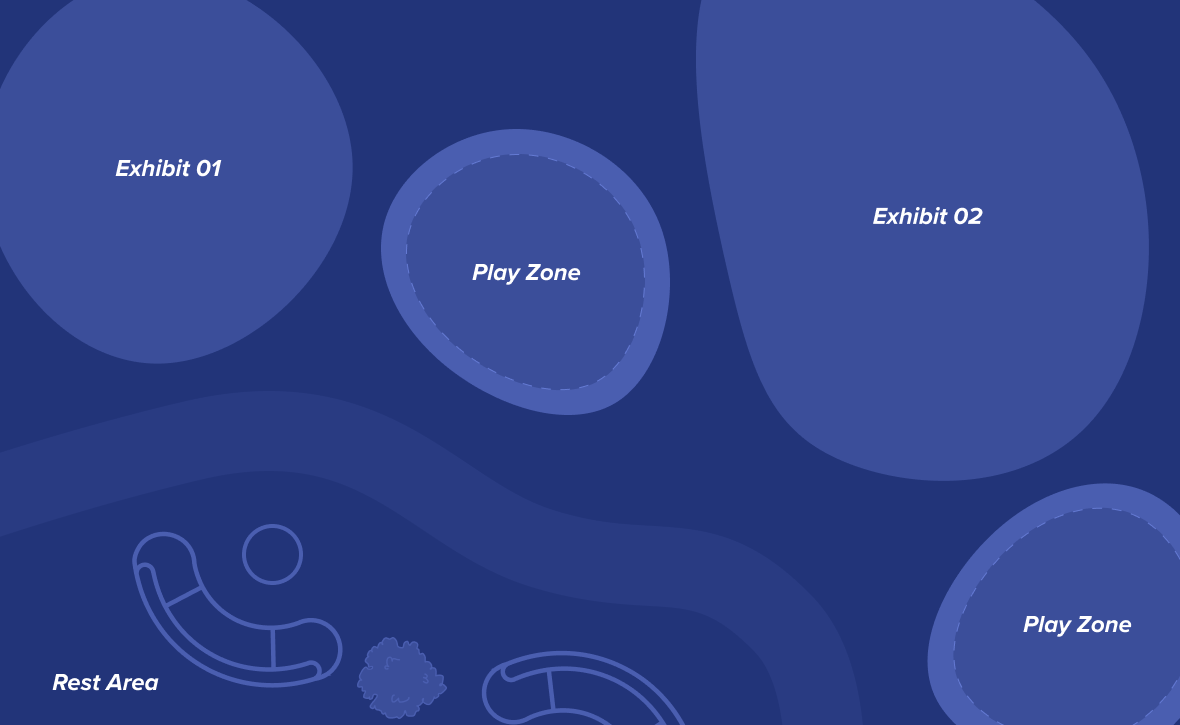
One of the most common and costly mistakes in museum and attraction design is treating the play space as an afterthought, something specified late in the process and shoehorned into whatever square footage is left over. The result is a play area that disrupts circulation, creates bottlenecks, or pulls families away from the rest of the building rather than guiding them through it.
When play space design is considered early in the process alongside architectural planning, it becomes a tool for shaping visitor flow. A well-positioned play environment can draw families deeper into an exhibit wing, create a natural dwell zone that reduces crowding elsewhere, or serve as a transitional moment between two distinct areas of the building.
For architects, this is an argument for bringing a play design specialist into the conversation at the concept or schematic design phase, not at the end of construction documents. The earlier the collaboration, the more seamlessly the play space integrates into the overall design.
Materials, Durability, and Finish Quality
Architects specifying for cultural institutions have high standards for material quality and finish. Play equipment that looks like it belongs in a fast food restaurant has no place in a carefully designed cultural space, and that concern is completely valid.
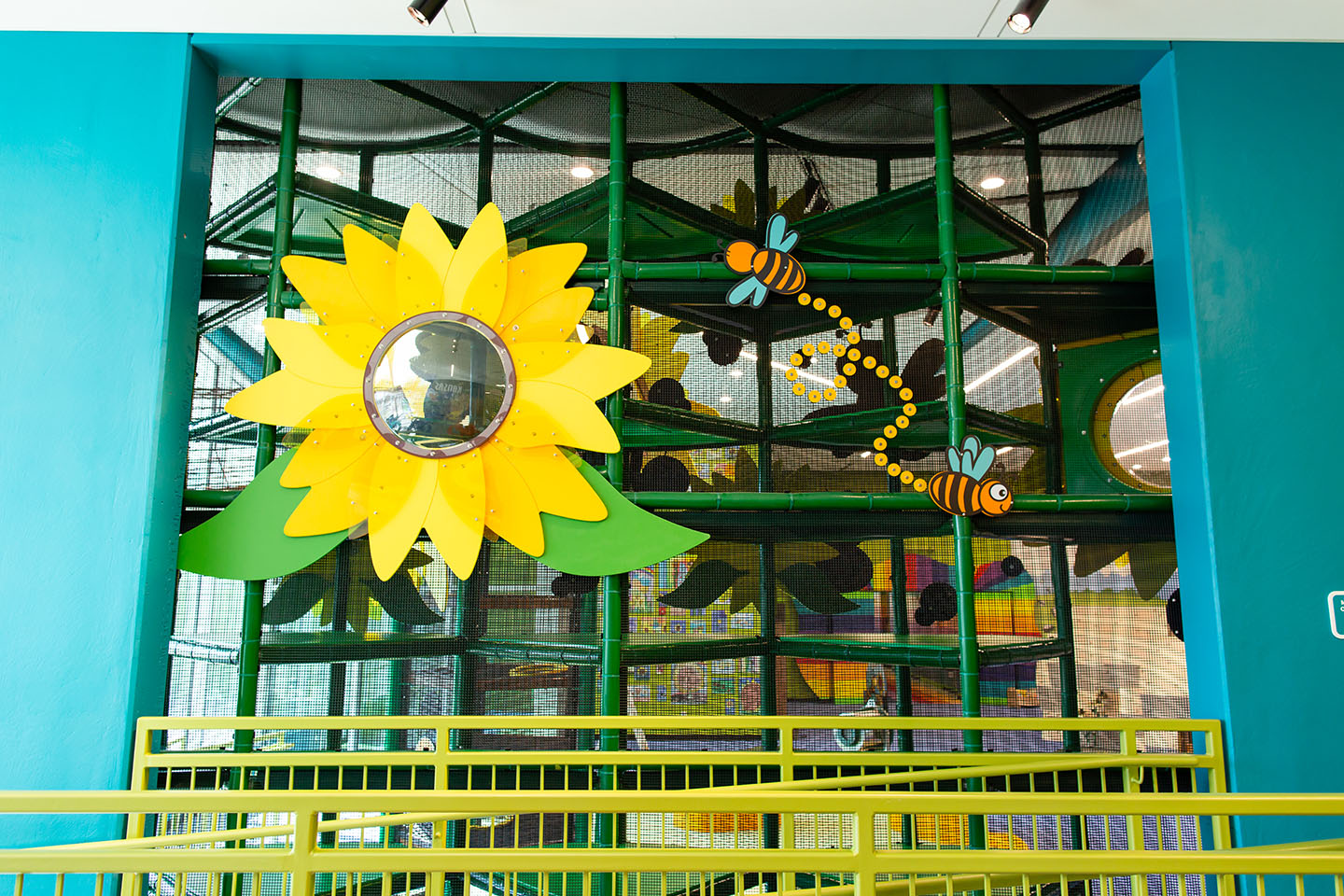
Themed play environments designed for healthcare or family attractions operate at a different level. Custom fabrication means materials, colors, textures, and forms can be specified to complement the architectural palette rather than clash with it. Finishes are chosen not just for aesthetics but for the kind of high-traffic durability that museum environments demand, surfaces that hold up under thousands of small hands every week while still looking intentional years after installation.
This is also where ADA compliance and inclusive design come into the picture. Every play environment Worlds of Wow designs meets ADA requirements and is built with universal accessibility in mind, so architects can be confident the installation will meet both code requirements and the institution's values around inclusion.
A Partner, Not a Vendor
The relationship between an architect and a play space designer should feel like a design collaboration, not a product specification. The best outcomes happen when both teams share information early, stay in dialogue through the design development process, and approach the project with the same commitment to the client's vision.
At Worlds of Wow, we work alongside architects on museum and attraction projects nationwide, from initial concept through installation. We bring expertise in themed environments, custom fabrication, and high-traffic play design, and we're committed to delivering something that makes the whole building better.
If you're working on a museum, zoo, healthcare facility, or family attraction project and want to talk through how a themed play space could fit the design, we'd welcome the conversation.
Enhanced.jpg)